Infinite
Space

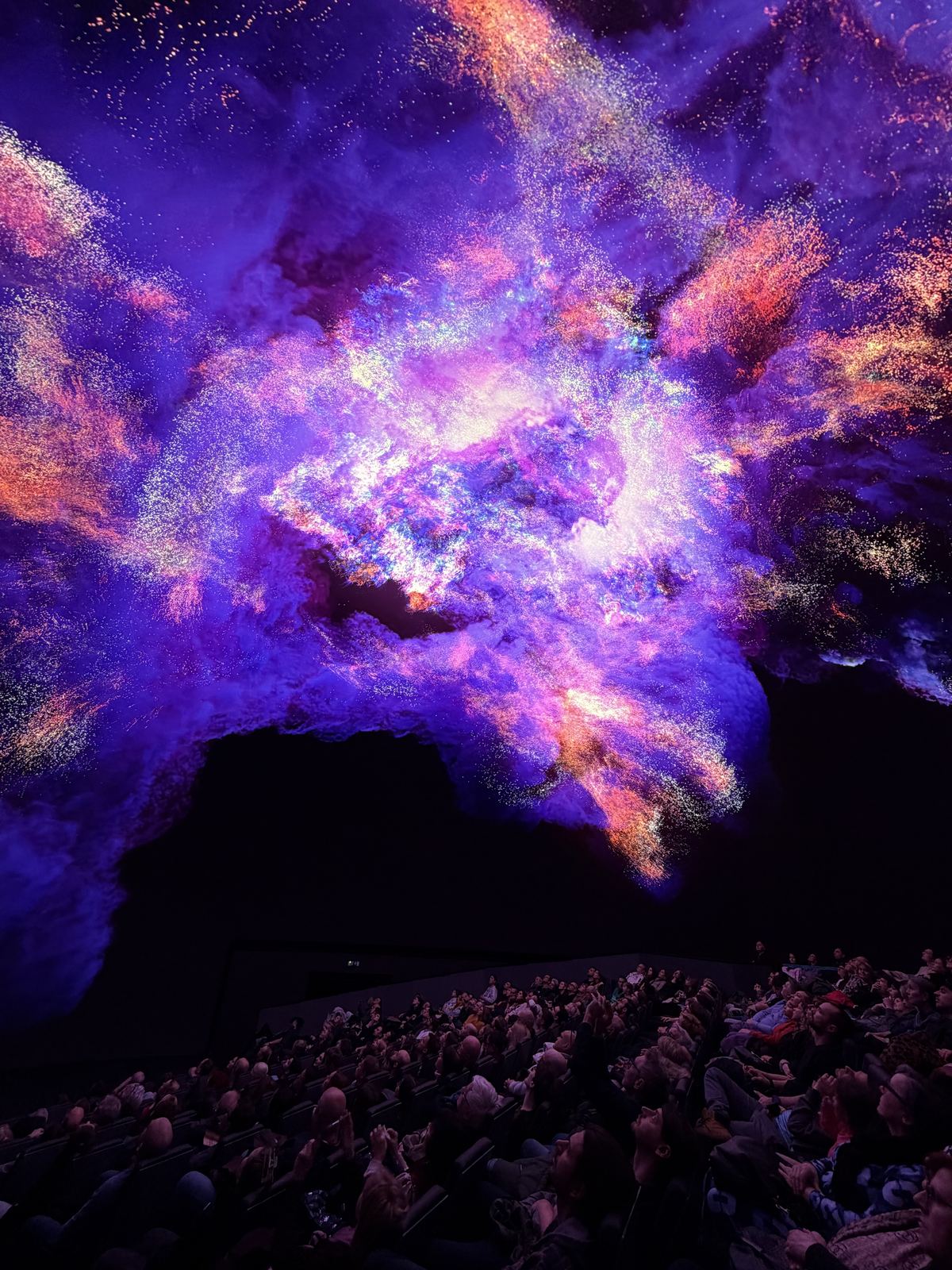
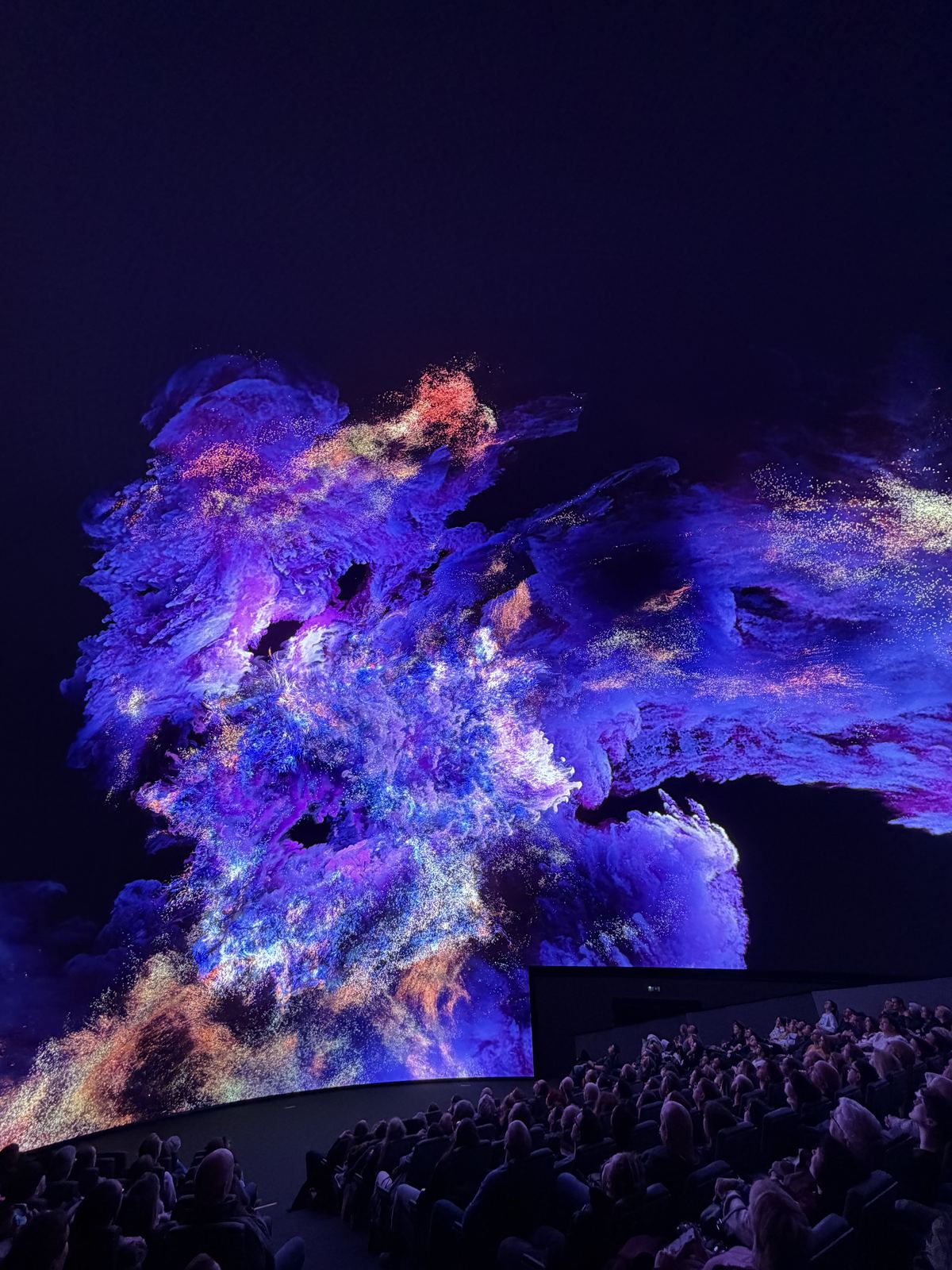
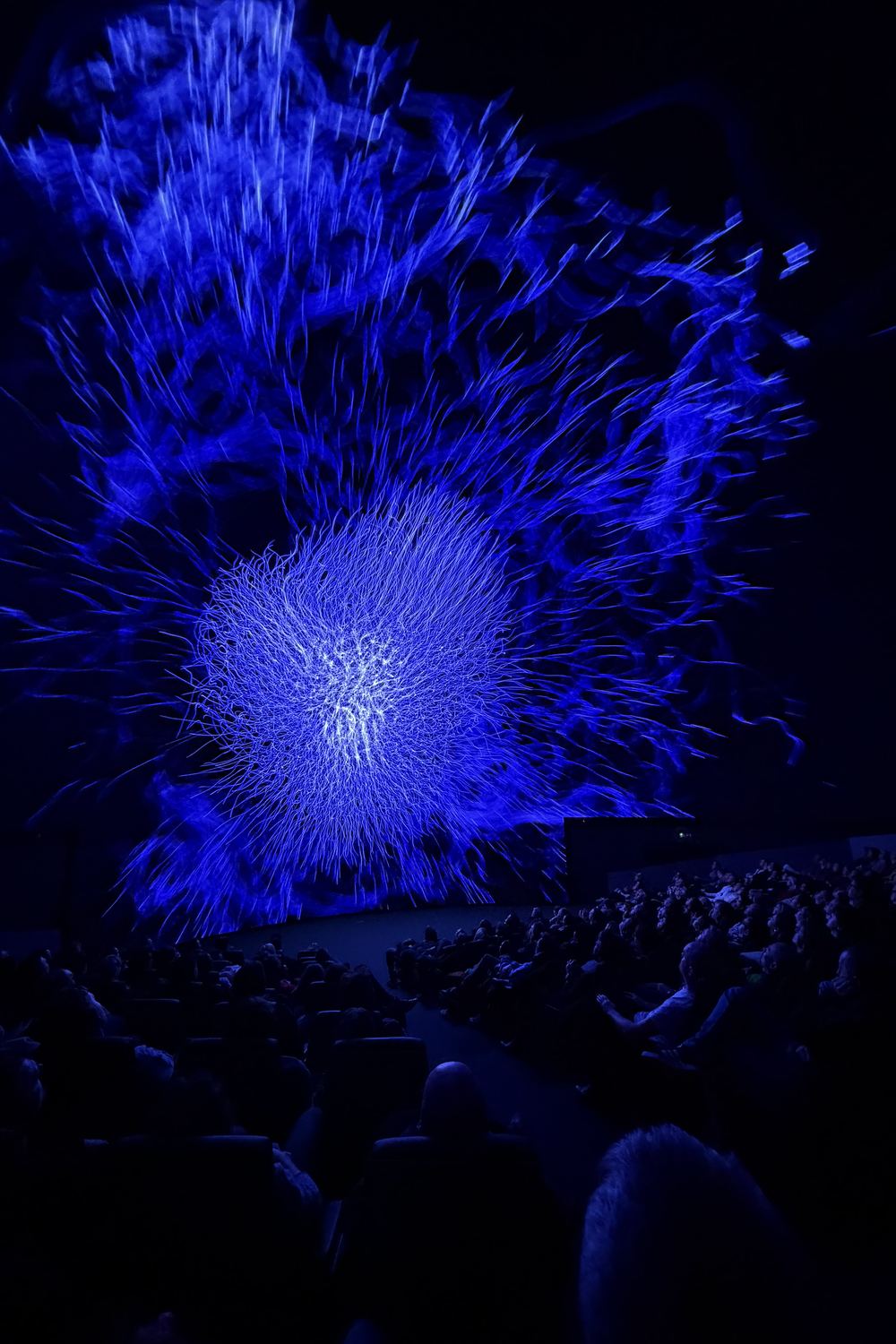
A unique fusion of original music by composer Rafael Anton Irisarri and immersive visuals by Dalibor Cée + Alex J. Jindrák. The first presentation of its kind in the Czech Republic — under Europe's most technologically advanced fully digital LED dome, 22 m in diameter, 45 million diodes.

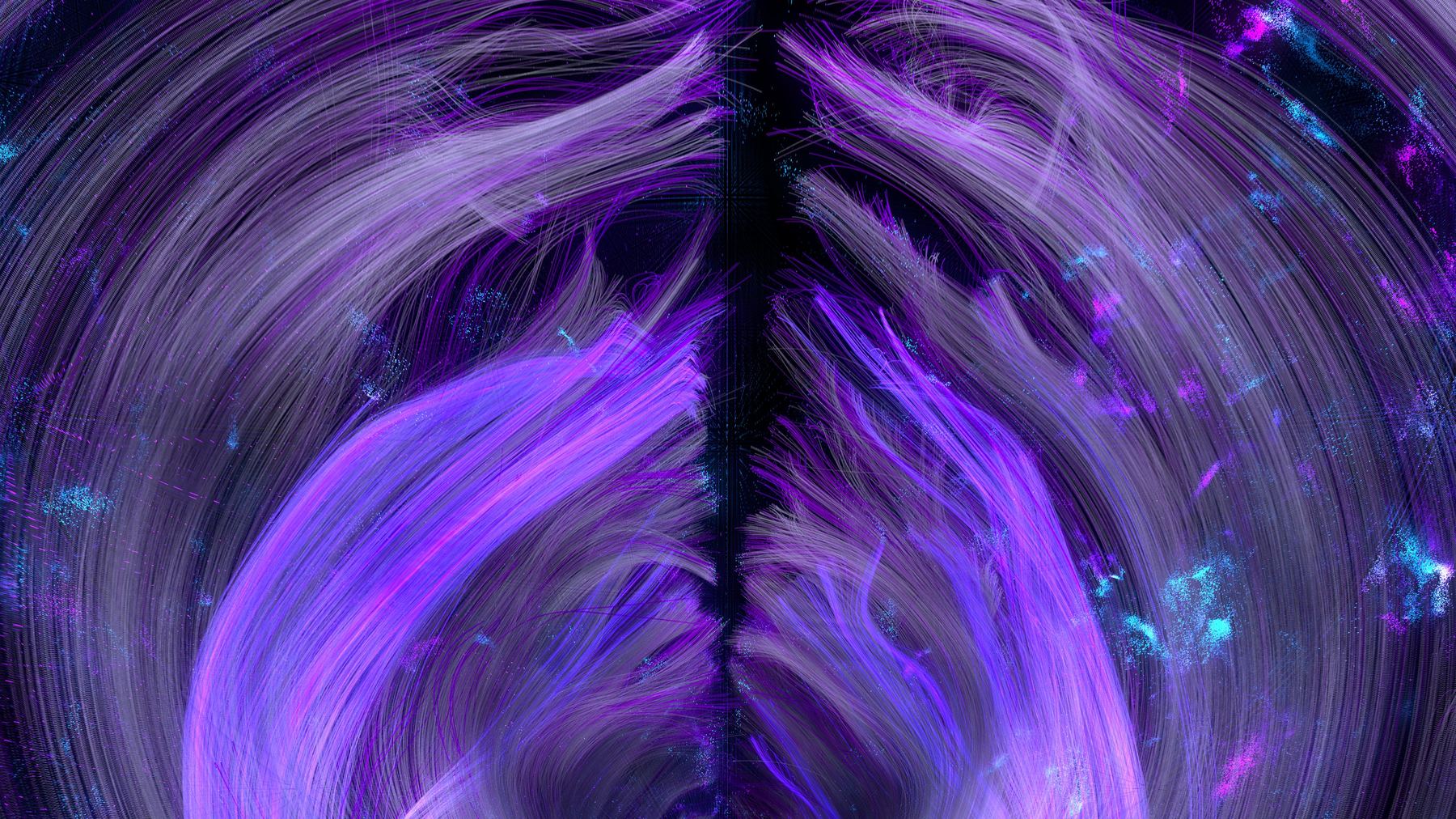
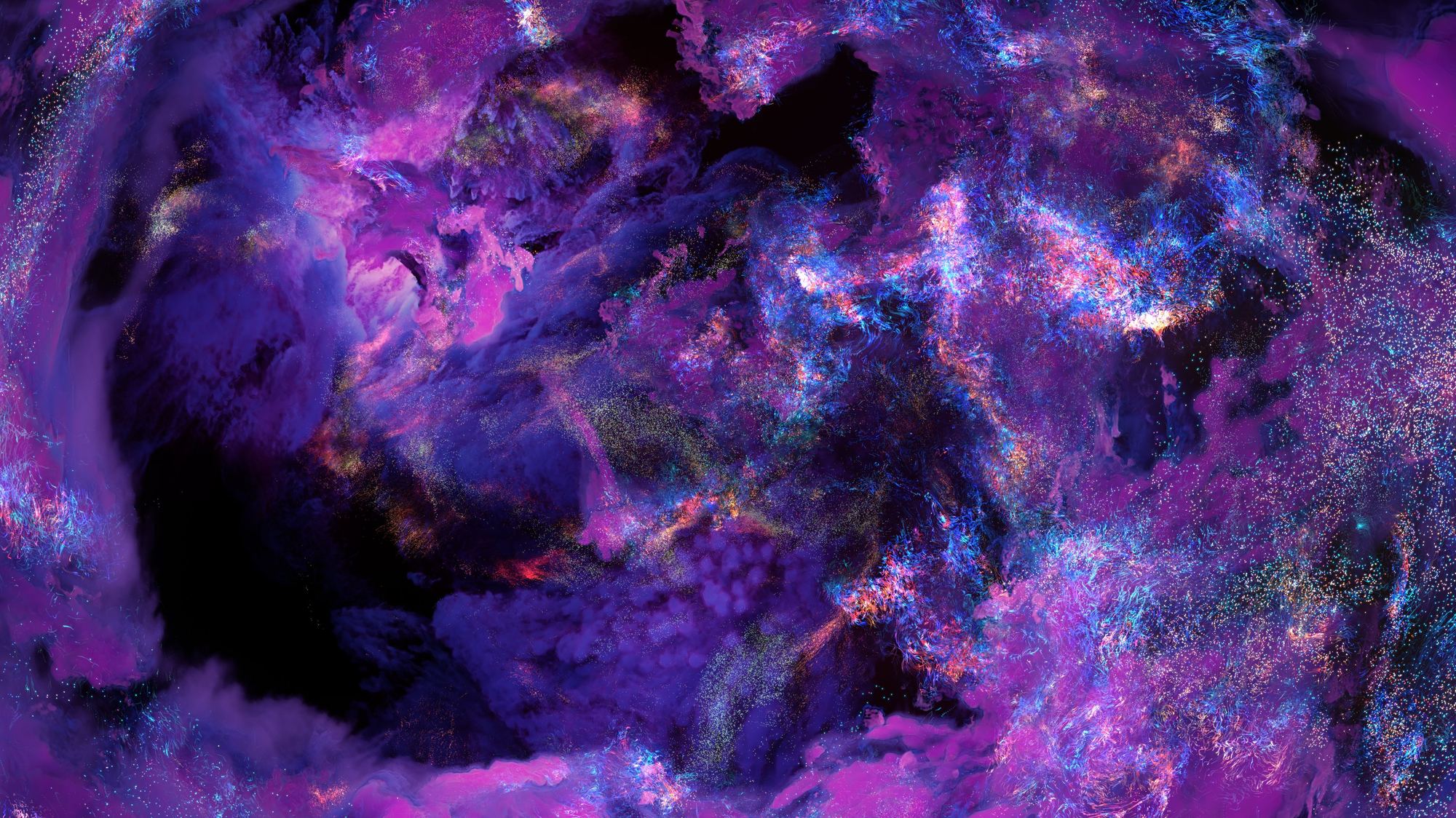
Infinite Space — hero visual
Year 2026
Premiere 31 March
Festival Spectaculare
Venue Planetárium Praha
Format Fulldome AV
Dome Ø 22 m / 45M dx
Dramaturg Josef Sedloň
Producer Modified.Studio
Duration 40 minutes

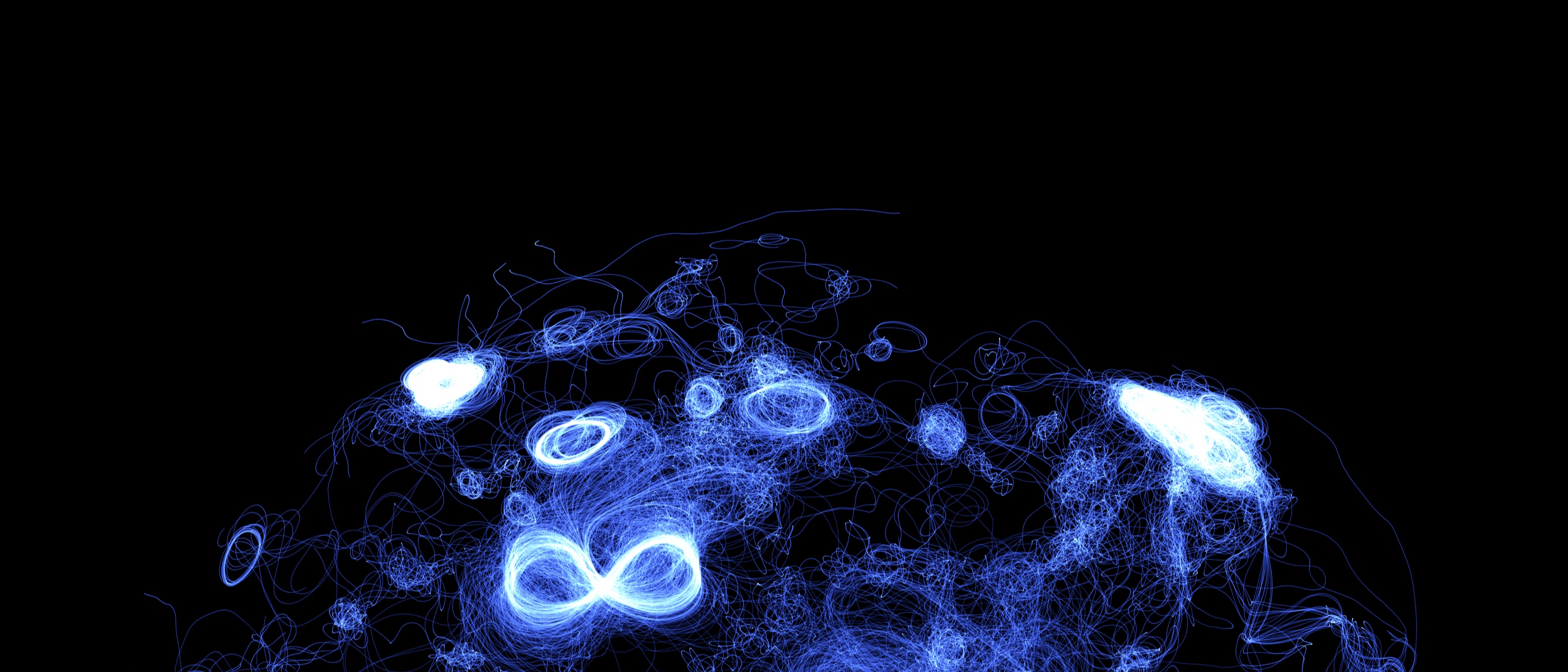
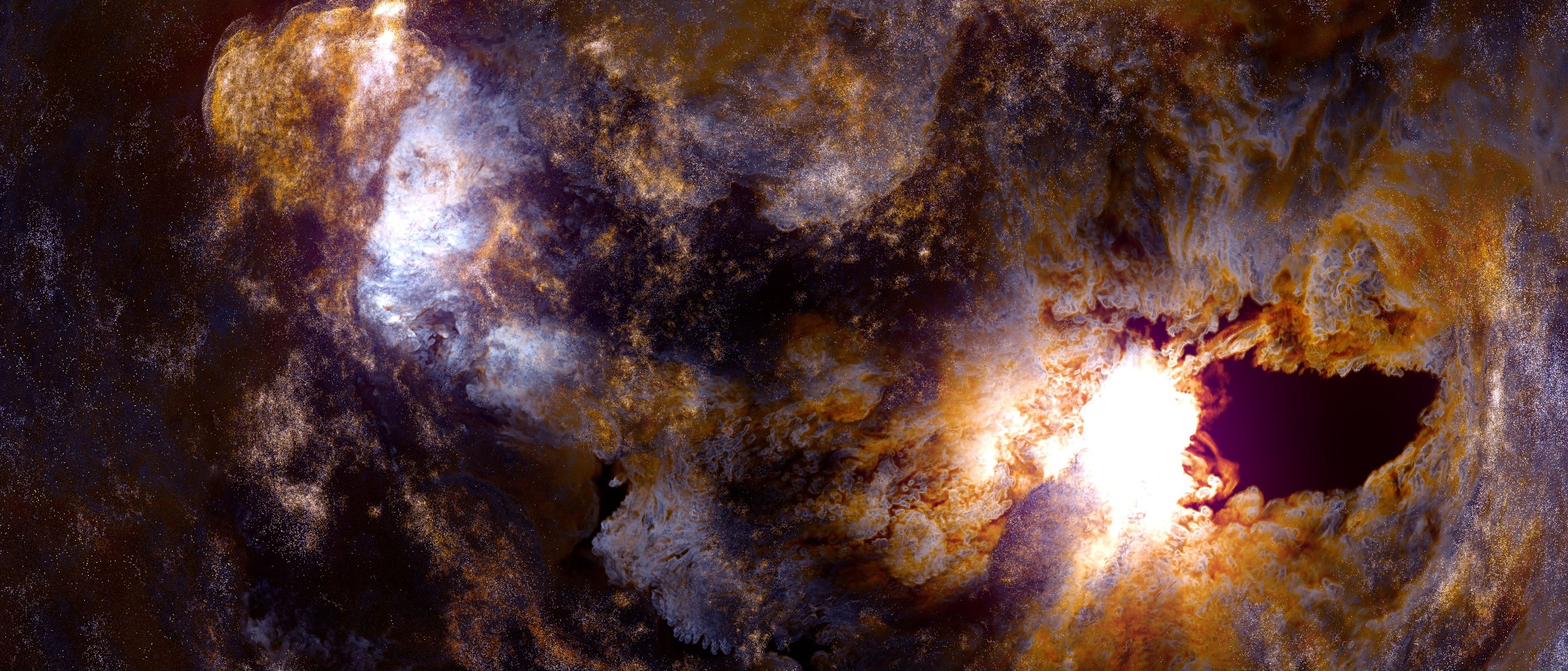
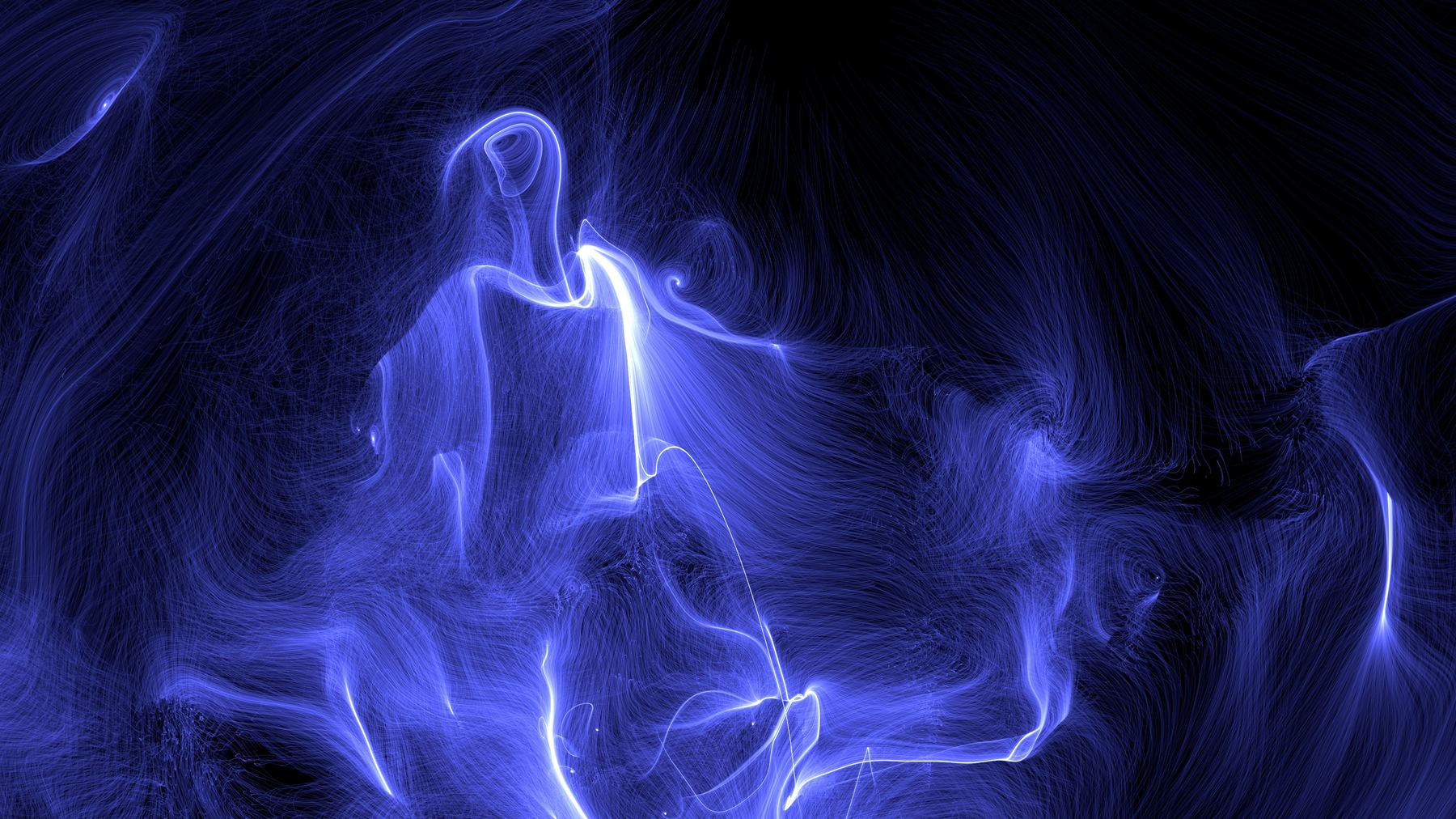
Empirical scientific data becomes the direct visual material — revealing a single pattern that repeats from fungal networks to the cosmic web of dark matter.

Infinite Space is a fulldome audiovisual production premiered on March 31, 2026 at Festival Spectaculare beneath the dome of the new Planetarium Prague — Europe's most technologically advanced fully digital LED dome, more than 22 meters in diameter and covered with over 45 million display diodes, enabling detail and contrast unimaginable with conventional projection technologies. It is the first presentation of its kind in the Czech Republic.

Dalibor Cée and Alex J. Jindrák work with LiDAR scans, MRI brain imaging, and cosmological simulations — empirical data that is not illustration, but the building material of the image. The music of Rafael Anton Irisarri — moving between post-minimalism, drone, ambient, and electroacoustic — is not defined by rhythm, but by duration. It holds the viewer in an extended moment where time slows and ceases to exist.

The projection creates a space for deep perception and contemplation, where experience is not guided by narrative, but by the viewer's own sensory awareness — opening questions about the nature of space, infinity, and human scale. All three screenings of the premiere day were sold out.

Producer: Modified.Studio. Dramaturg: Josef Sedloň (Festival Spectaculare). The premiere was the final announced audiovisual show of the 13th edition of Festival Spectaculare (March 5 – April 10, 2026).

— Intent

A pattern
across scales.

Visual chaos, or a clearly defined artistic language? Infinite Space is both — and in that tension lies the meaning of the entire projection.

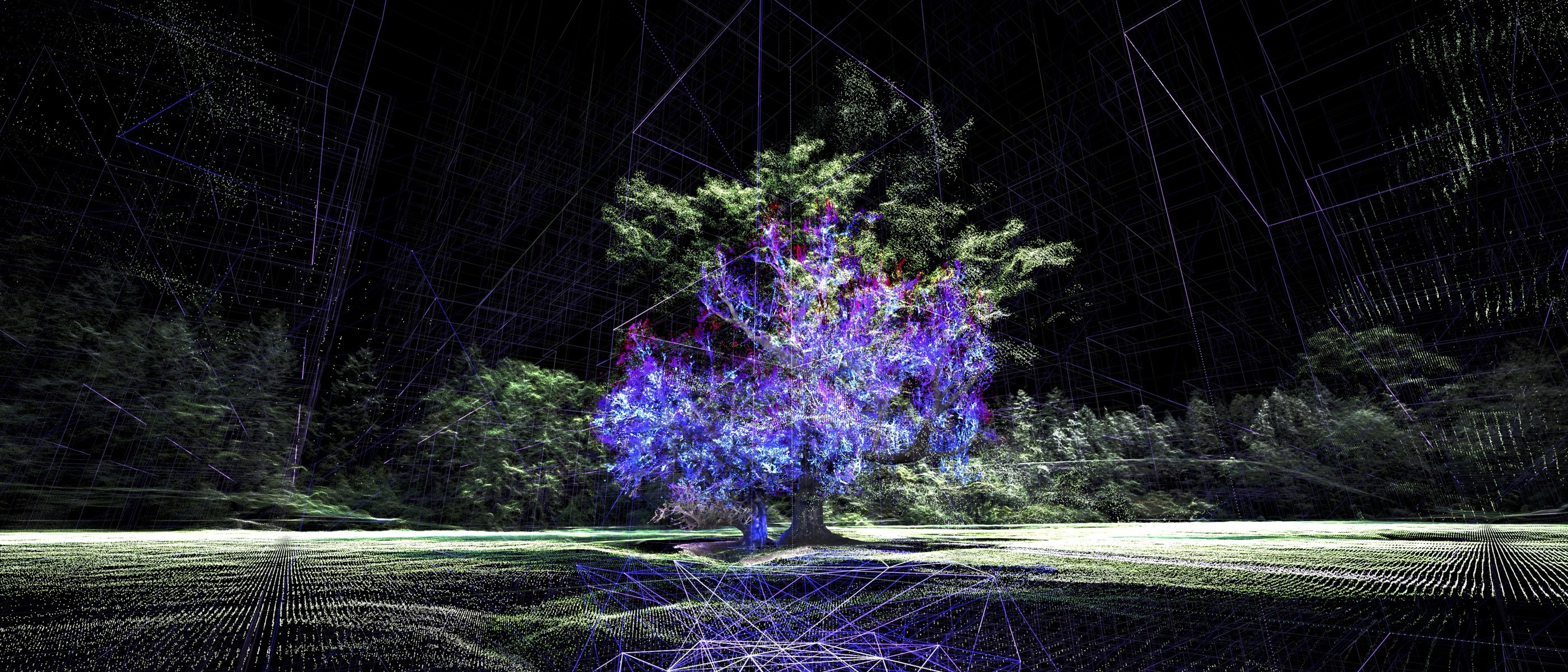
We live inside a pattern that repeats endlessly across scales. In the roots of a three-hundred-year-old oak in Průhonice Park. In the network of mycelium that threads through the soil beneath it. In the nervous system of the human brain. In the map of galaxies five hundred million light-years away. In the invisible architecture of dark matter that holds the universe together.

This shared language of nature, brain, and cosmos is not something we invented — we only made it visible. We worked with real empirical data: a laser scan of a tree, a scan of thirty mycelium species, diffusion MRI of the human brain, a map of galactic motion, a simulation of dark matter. No illustrations. No metaphors. Everything the viewer sees was born of measurement — of what nature is already saying, if there is someone to listen.

That instrument is particles. Hundreds of millions of them, unified into a single visual language in which the measured truth of a tree and the measured truth of the universe become two words of the same meaning.

We are not merely matter moving through space. We are part of a whole — a chaos that has order. Infinite Space is an invitation to immerse yourself in this whole and to realise: the universe is inside the human brain, the human brain is inside the universe, and both are organised identically.

The music of Rafael Anton Irisarri is not accompaniment. It is another layer of the same language.

— How the image was made

From data
to image.

A four-stage pipeline that translates measured reality — biological, geological, cosmological — into a single visible pattern. Data is the material, not the illustration.

/ 01

Empirical
data

LiDAR forest scans, MRI brain imaging, and cosmological dark-matter simulations are sourced as raw scientific datasets. No interpretation, no styling.

// .las · .nii · .hdf5
/ 02

Geometric
translation

Point clouds and volumetric data are converted into 3D geometry using custom pipelines. The pattern that emerges — across scales, across disciplines — is identical.

// custom shaders · 3D pipeline
/ 03

Image
& score

Visual composition is built scene by scene by Dalibor Cée and Alex J. Jindrák. Score by Rafael Anton Irisarri is built in parallel — duration, not rhythm, as the structuring axis.

// Cinema 4D · Octane · 5.1 stems
/ 04

Fulldome
experience

Projected on the Prague Planetarium LED dome — 22 m diameter, 45 million diodes. A space for deep perception and contemplation, where experience is not guided by narrative, but by the viewer's own sensory awareness.

// Fulldome 4K · 22 m / 45M dx
— Production breakdown

Every chapter.
Every dataset.

A detailed breakdown of the production — stills, descriptions, and process notes for each of the seven chapters: from the LiDAR tree scan and mycelium networks to the brain, the cosmic web, and the dark matter simulation.

— Uniqueness

One pattern.
Three systems.

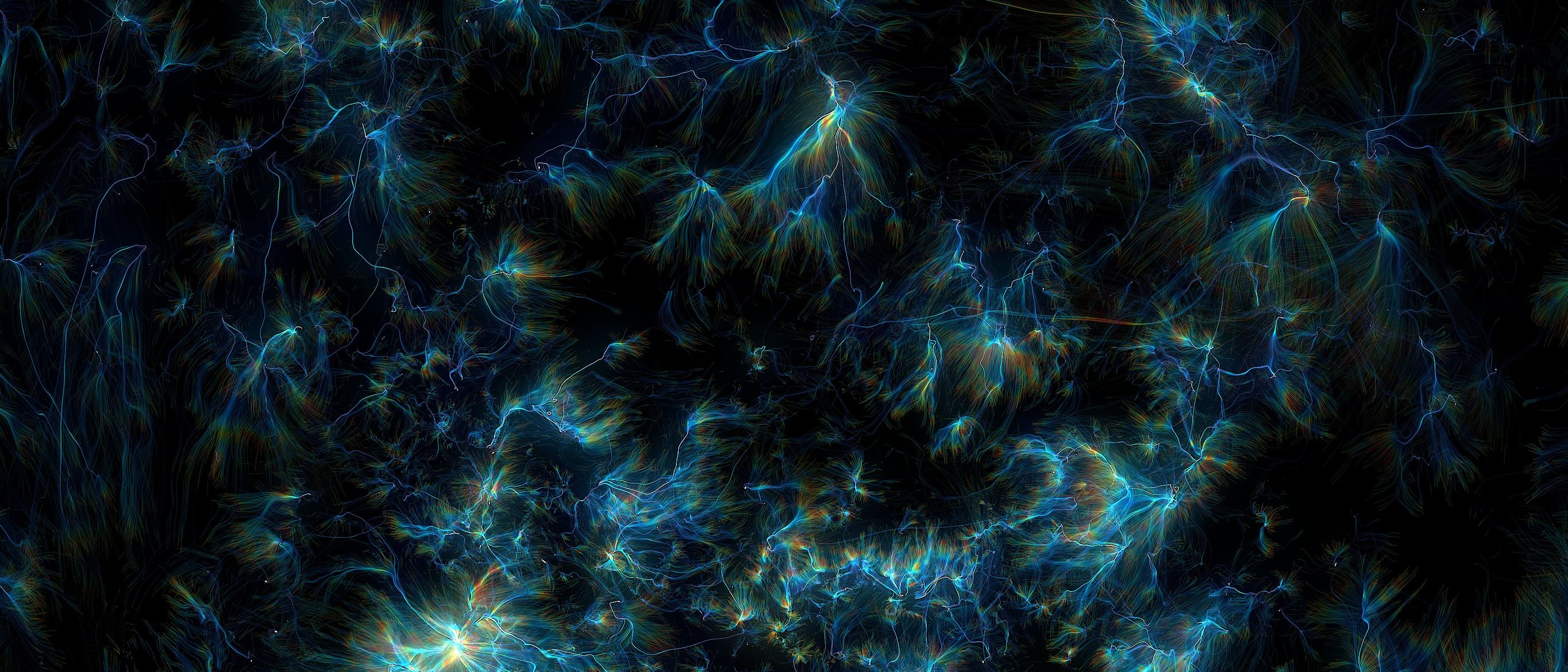
What makes Infinite Space singular is not the tools or the datasets. It is one observed phenomenon the projection makes visible: that three fundamentally different systems — the human brain, the mycelium beneath our feet, and the cosmic web of galaxies that is Laniakea — share precisely the same structure.

This is not metaphor. This is not a visual joke. It is mathematics.

The brain: 86 billion neurons linked by hundreds of trillions of synapses. Mycelium: a network of hyphae binding trees and soil chemistry into one distributed organism. Laniakea: galaxies pulled by gravity along filaments across five hundred million light-years. Three scales. Three substances. Three scientific fields that barely speak to one another.

And yet: placed inside the same particle renderer, all three look identical. They branch. They connect at nodes of high density. They channel flow through filaments. They leave empty volumes behind. The pattern is identical because they are solving the same problem — how to efficiently connect distributed matter while remaining adaptable.

The universe answered once — with gravity and dark matter in the first billion years — and biology inherited that answer and scaled it down by thirty orders of magnitude. The mycelium beneath an oak in Průhonice Park uses the same logic as the supercluster our galaxy is falling toward. Not coincidence. The only grammar that works.

What Infinite Space does for the first time

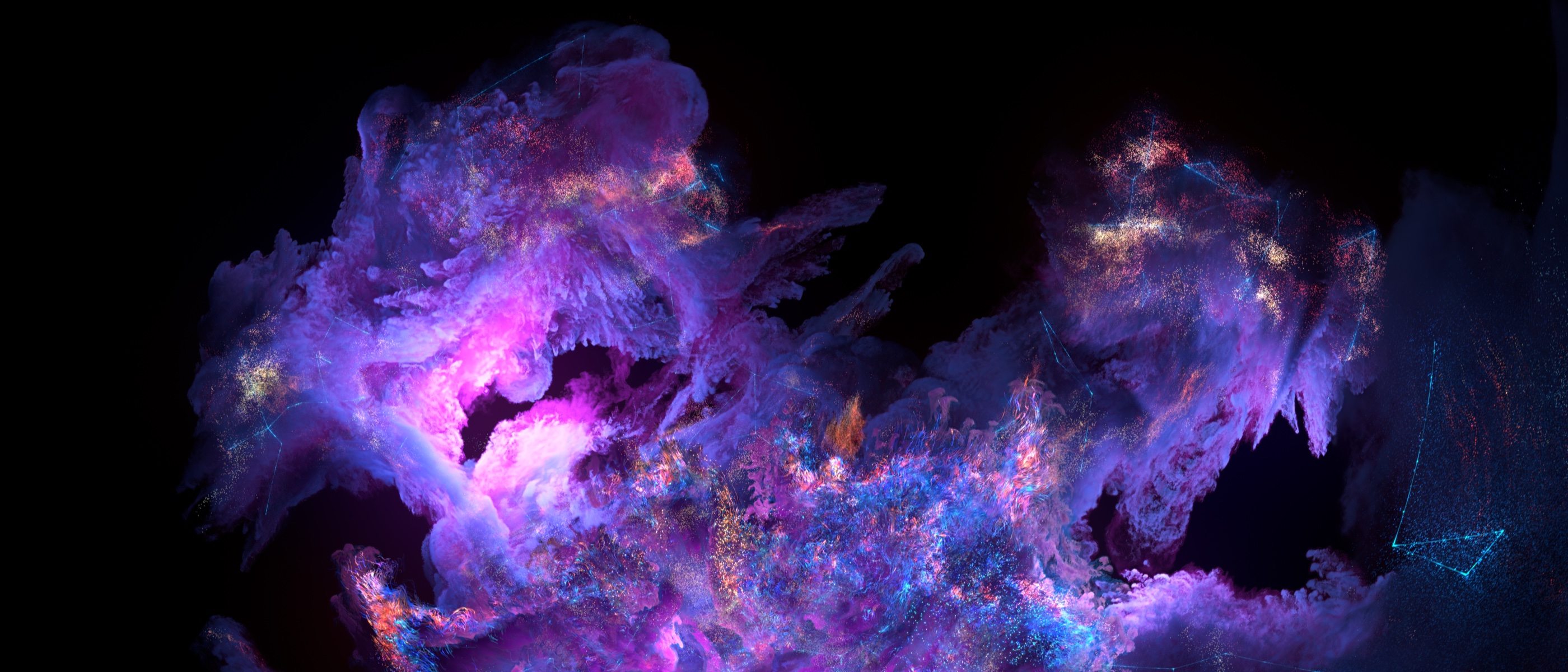
It shows this convergence directly. No labels. No arrows. No scientific diagrams. One visual language across every scene. The same renderer accumulates millions of points in the scan of a tree and in a simulation of dark matter. The same colour system encodes data, not aesthetics — blue for structure and gravity, violet for the threshold of the visible, orange for thermodynamics, grey-white for the brain's white matter, white for density saturation. The same darkness holds it all together.

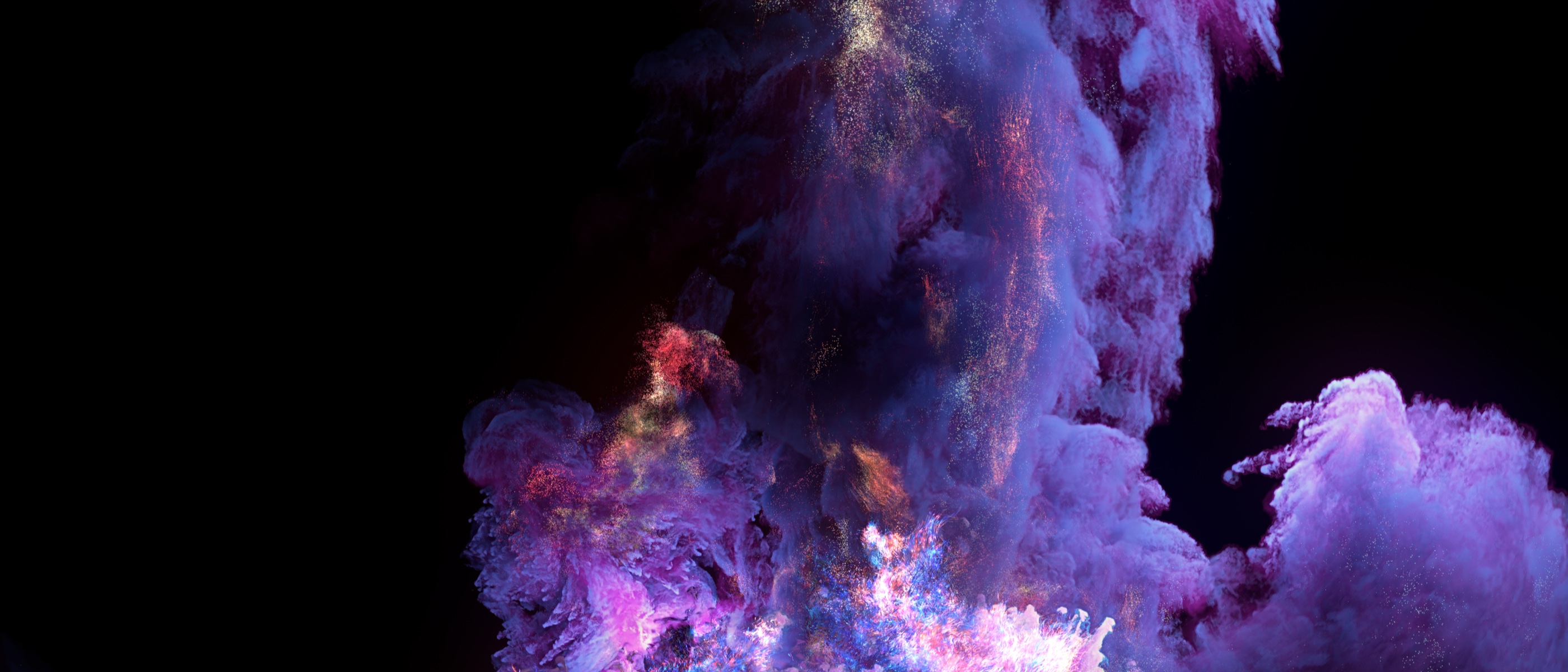
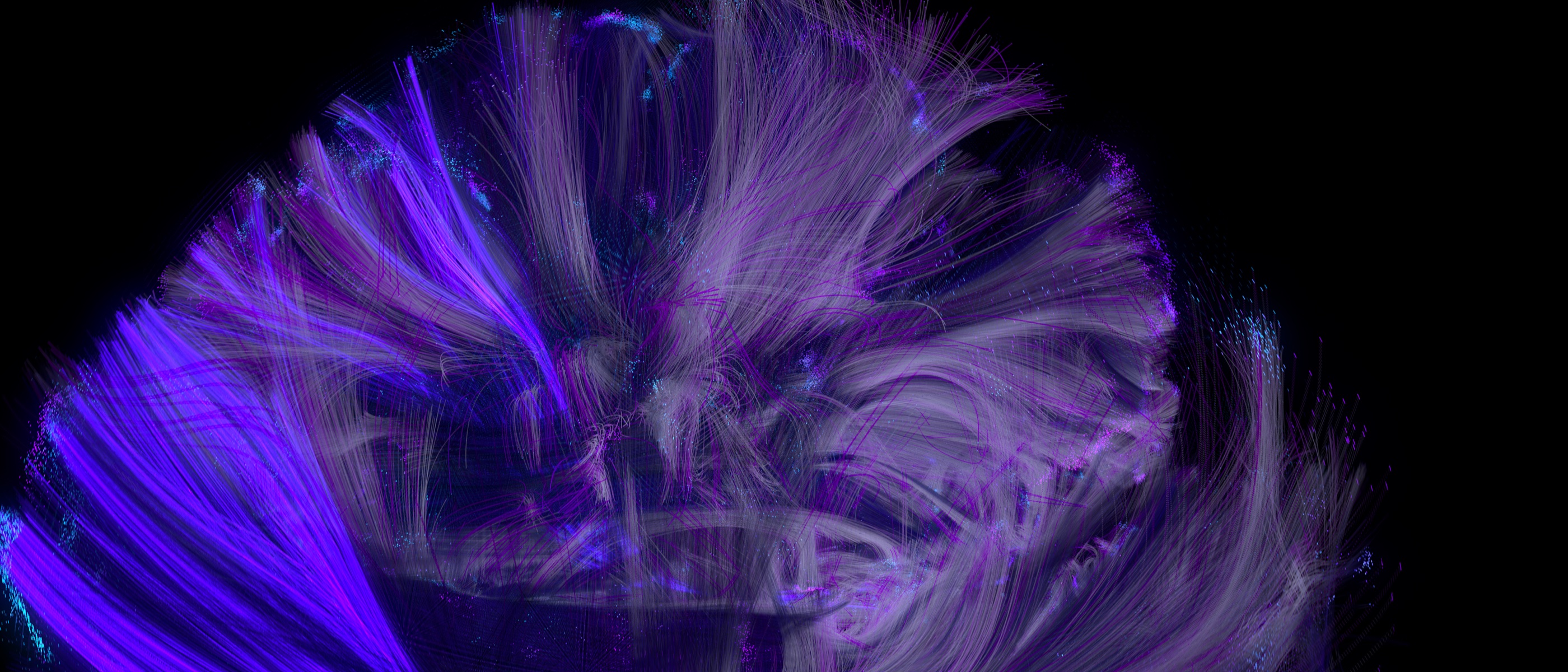
Krakatoa, Thinkbox's particle engine, was built for film visual effects. We used it as a spectroscope: 800 million particles for the brain, from diffusion MRI and DICOM; millions for the nebulae, from TyFlow fluid simulation; trajectories for Laniakea, from the Doppler-measured motion of tens of thousands of galaxies; three layers of N-body simulation for the dark matter web of CosmoSim; a fusion of laser scan and photogrammetry for the tree; thirty fungal species in living growth for the mycelium.

Seven datasets. One engine. One question: where is the information, and how brightly should it burn?

Why no one has done this before

Outside Infinite Space, these datasets exist — but they have never met. A neurologist studies the brain. A mycologist studies mycelium. A cosmologist studies the supercluster. Each in their own language, at their own scale. No specialist paper can show that three fields work with the same structure — doing so requires stepping outside the disciplinary frame.

Infinite Space is the first projection to do that. It places these datasets side by side in the same visual frame and lets the viewer's eye see what no text can: the pattern directly.

We are not the first to scan a tree. Not the first to scan a brain. Not the first to simulate dark matter. We are the first to let them speak in the same light.
Music defined not by rhythm, but by duration.

Italian-American ambient composer based in New York. Working between drone, ambient, and post-minimalism — his compositions are defined by duration and tonality, not rhythm. For Infinite Space, the composer was invited by Festival Spectaculare as an authorial partner of the production.

ComposerRafael Anton Irisarri
OriginItalian-American · NYC
GenreDrone · Ambient · Post-min.
Format5.1 surround
— Press & Recognition

Featured
coverage.

Irisarri's music does not propel the listener forward; it holds them within an extended moment where time slows down and becomes almost intangible. The visual projection expands this state into a dreamlike, infinite space."

Josef Sedloň, Dramaturg Festival Spectaculare · Official press release · 16 Feb 2026

„A unique combination of original music by composer Rafael Anton Irisarri and impressive visuals by Czech duo Dalibor Cée + Alex J. Jindrák. This project uses the most technologically advanced fully digital LED dome in Europe with more than 45 million diodes."

GoOut.net Festival listing · 2026

„On March 31, the Prague Planetarium hosts three evening screenings of Infinite Space, a 360-degree audiovisual show created by Italian-American ambient composer R. A. Irisarri alongside Czech visual talents Dalibor Cée and Alex J. Jindrák."

Expats.cz Feature · 26 February 2026
Spectaculare.cz Festival official
Planetum.cz Venue official
GoOut.net CZ · EN listing
Expats.cz EN feature
Prague.eu Official tourism
— Context

An authorial project
by Modified.Studio.

Infinite Space is an authorial project produced by Modified.Studio — a multidisciplinary visual studio whose range moves along a wide scale, from the founder's authorial projects through commercial production to AI-driven advertising work.

This breadth is not accidental. It emerges precisely in the overlap between experiment and practice, between tools developed for film and the application of scientific data. Infinite Space belongs to the studio's authorial line.

The project premiered as part of the Prague festival Spectaculare, whose role in Infinite Space is purely distributional — the festival served as the platform that introduced the projection into the public space. The premiere took place at Planetárium Praha, which in this project figures exclusively as the venue: a projection space with an 8K fulldome system and 7.1 surround sound that technically matches the format of the projection. Beyond providing the space, Planetárium Praha is not creatively or productively involved in the project.

This production structure is intentional. Infinite Space has been built from the outset as a portable fulldome format — a project designed to be presented in any planetarium or immersive space in the world, independent of its place of origin.

— About the artists

Visuals by
Cée + Jindrák.

/ Visuals · Co-direction

Alex J.
Jindrák

Multidisciplinary artist working at the intersection of fine art, technology, and visual communication. Founder of Modified.Studio.

His practice spans CGI, light, image, and sound — resulting in installations, projections, and immersive audiovisual environments that combine artistic precision with clear structural thinking.

His work is defined by a distinct personal signature, meticulous attention to detail, and an ability to think within broader conceptual frameworks. In his current practice, AI plays a significant role as a developing tool for visual thinking and authorial expression.

Modified.Studio operates as an extended platform for the realization of complex projects — from initial concept to final execution. The studio functions both as a creative and developmental space where art, technology, and systematic content work converge.

/ Visuals · Co-direction · CGI

Dalibor
Cée

Visual creator and CGI artist focused on digital imagery, technology, and audiovisual production. Specialist in 3D graphics, visual effects, and complex visual environments.

While grounded in strong technical foundations, his work maintains a pronounced sense of atmosphere, composition, and detail. His creative approach draws inspiration from art, natural principles, and organic patterns — influences that shape the way he thinks about material, movement, and light.

For Dalibor, the digital environment is not merely a tool, but a space in which he seeks balance between realistic representation and stylization. Central to his practice is the ability to translate abstract ideas into concrete visual form, crafting imagery that is both technically exact and visually coherent.

Credits
& Team

Direction Alex J. Jindrák
Direction Dalibor Cée
Production Modified.Studio
Dramaturg Josef Sedloň
Venue Planetárium Praha
Year 2026
— Vision · what's next

Built
for the world.

Infinite Space has been built from the outset as a global fulldome project. Its core intention is to be presented worldwide.

Rendered in 8K and optimised for a 210° LED dome with 7.1 surround sound. With no national language and no culturally local references — the pattern branch, connect, flow toward density is read by the viewer's eye anywhere in the world.

The goal is to bring Infinite Space to planetariums, science centres, fulldome festivals, and immersive spaces across the world. Not to close the project inside a single premiere, but to open it to audiences across continents, languages, and cultures.

Infinite Space is available to any planetarium, immersive venue, science centre, or dome festival with the technical capacity to host the format. Inquiries about screenings, distribution, or programme collaboration are received by Modified.Studio directly.